Fix Drainage Problems in a Sloped Side Yard
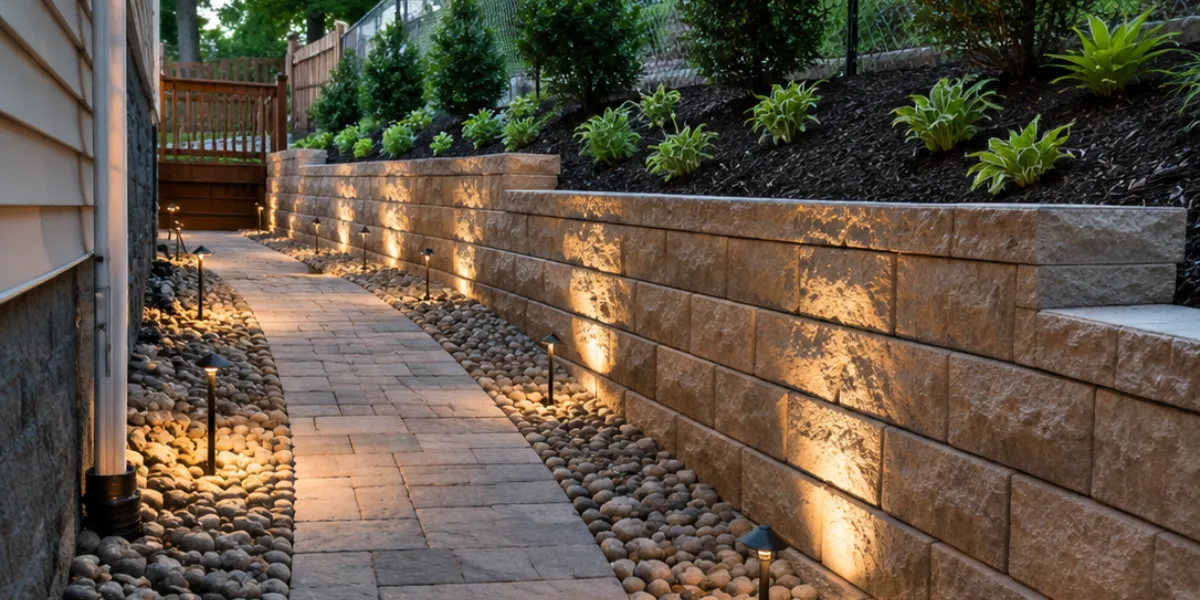
If your side yard is constantly wet, muddy, or hard to walk through, you’re not alone. This is one of the most common drainage problems we see across Central New Jersey.
It usually happens when a neighboring property sits slightly higher, causing water to run downhill toward your home. Combine that with a narrow side yard and clay-heavy soil, and you end up with a space that stays soggy and unusable.
At Lewis Natural Landscapes, we bring over 25 years of hands-on experience solving these exact issues. The good news is, with the right approach, even the worst side yard drainage problems can be fixed permanently.
Why Side Yard Drainage Problems Happen
Side yards are often overlooked during original construction, which leads to issues over time.
In Central NJ, the most common causes include:
-
- Neighboring properties sitting at a higher elevation
- Water naturally flowing toward your foundation
- Downspouts discharging into the side yard
- Clay-heavy soil that drains slowly
- Limited space that restricts proper grading
These factors combine to create a perfect situation for water to collect and sit.
Common Signs You Have a Side Yard Drainage Problem
Most homeowners notice the symptoms before they understand the cause.
Look for:
-
- Standing water after rain
- Soft, muddy ground that never fully dries
- Water pooling near your foundation
- Erosion or washed-out areas
- A side yard that’s difficult to walk through
If you’re dealing with any of these, the issue isn’t going away on its own.
Why This Problem Shouldn’t Be Ignored
Water collecting near your home can lead to more than just a messy yard.
Over time, it can cause:
-
- Moisture buildup near the foundation
- Increased risk of basement water issues
- Ongoing erosion and landscape damage
- A space that becomes completely unusable
Addressing the problem early prevents more expensive repairs later.
Best Solutions for Sloped Side Yard Drainage
There’s no one-size-fits-all fix. The best results come from understanding how water moves through your property and designing a solution around it.
Retaining Wall With Integrated Drainage
For properties where the neighbor’s yard sits higher, a retaining wall is often the most effective long-term solution.
It works by:
-
- Holding back soil and elevation from the higher side
- Creating a defined, controlled edge
- Allowing drainage systems to be installed behind the wall
A properly built wall includes:
-
- Compacted base and footing
- Clean stone backfill
- Perforated drainage pipe to relieve water pressure
This prevents water buildup and protects the structure over time.
French Drain or Subsurface Drainage System
A French drain is designed to capture and redirect water before it becomes a problem.
It typically:
-
- Runs along the length of the side yard
- Collects groundwater and surface runoff
- Moves water away from the home to a safe discharge point
This is especially important in narrow side yards where water has nowhere else to go.
Gravel Drainage Strip with Paver Pathway
This is one of the most practical upgrades for usability.
It combines:
-
- A gravel base that allows water to drain through
- A clean, stable walking surface
- A defined pathway that makes the space functional
Benefits include:
-
- Eliminating muddy, unusable areas
- Improving access between front and backyard
- Creating a low-maintenance solution
Downspout Extensions & Water Management
In many cases, roof runoff is making the problem worse.
Simple upgrades can include:
-
- Extending downspouts away from the side yard
- Connecting downspouts into drainage systems
- Redirecting water to more appropriate areas
This reduces the amount of water entering the problem area in the first place.
The Best Results Combine Multiple Solutions
Most side yard drainage issues require more than one fix.
A typical solution might include:
-
- Retaining wall to manage elevation
- Drainage system to move water
- Gravel and pathway for usability
This layered approach ensures the problem is solved from multiple angles, not just temporarily covered up.
What a Finished Side Yard Should Look Like
When designed properly, your side yard should:
-
- Stay dry and stable after rain
- Have a clean, defined pathway
- Be easy to walk through year-round
- Require minimal maintenance
Instead of avoiding the space, it becomes a functional part of your property.
Common Mistakes to Avoid
We often get called in to fix these:
-
- Adding gravel without addressing drainage
- Installing a wall without proper drainage behind it
- Ignoring the source of the water
- Trying to fix the issue without correcting grade
These temporary fixes usually fail within a season or two.
When It Makes Sense to Bring in a Professional
Side yard drainage problems can be tricky due to limited space and multiple factors at play.
It’s worth bringing in a professional when:
-
- Water is consistently moving toward your home
- The space stays wet for long periods
- You’re considering a retaining wall or drainage system
- You want a permanent solution instead of trial and error
A proper plan ensures everything works together.
Start Fixing Your Side Yard the Right Way
If your side yard is constantly wet, muddy, or difficult to use, it’s not something that will improve on its own.
At Lewis Natural Landscapes, we design and build drainage solutions across Central New Jersey that are tailored to your property and built to last.
Request a free quote to get started, or schedule a paid consultation if you want a detailed drainage and design plan you can implement on your own.