Best Privacy Plantings for Homes in Central New Jersey (What Actually Works)
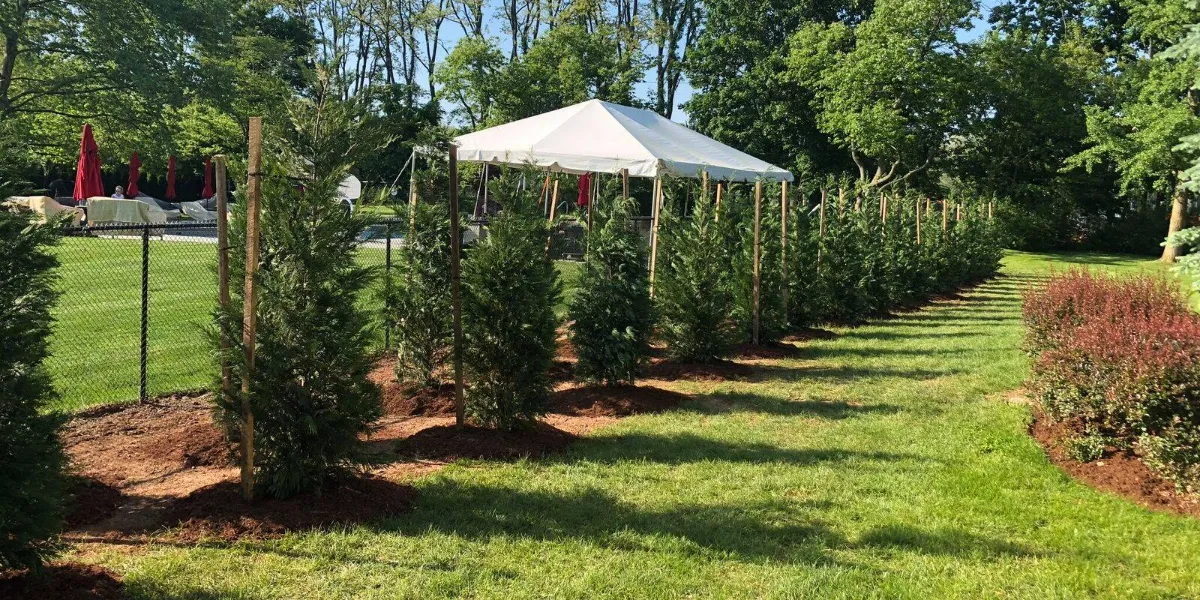
In many Central New Jersey neighborhoods, homes are closer together than homeowners would like. Whether it’s a neighboring backyard, a busy road, or a lack of screening, privacy quickly becomes a priority.
The challenge is that most “privacy plantings” are done incorrectly. Rows of trees get planted too close together, the wrong species are chosen, or the layout doesn’t account for long-term growth.
At Lewis Natural Landscapes, we bring over 25 years of hands-on experience designing and installing privacy plantings across Central NJ. The goal isn’t just to block a view, it’s to create a solution that looks good, grows properly, and holds up over time.
What Makes a Good Privacy Planting?
Creating privacy with plants is about more than just putting a row of evergreens along your property line.
A successful privacy screen needs to consider:
-
- Year-round coverage (especially in winter)
- Mature size and spacing, not just how it looks today
- Growth rate vs long-term maintenance
- Sunlight, soil, and drainage conditions
- Depth and layering, not just a single row
Without planning for these factors, even new plantings can quickly become overgrown, uneven, or ineffective.
Best Plants for Privacy in Central New Jersey
The right plant selection depends on your property, but these are some of the most reliable options we use in Central NJ landscapes.
Evergreens for Year-Round Privacy
These form the backbone of most privacy screens:
-
- Green Giant Arborvitae – Fast-growing, tall, and low maintenance
- American Arborvitae – More compact option for tighter spaces
- Skip Laurel – Dense, broadleaf evergreen with a softer look
- Holly varieties (Inkberry, Nellie Stevens) – Great for structured or natural designs
These provide consistent screening throughout the year and establish relatively quickly.
Layered Privacy Plantings (A Better Approach)
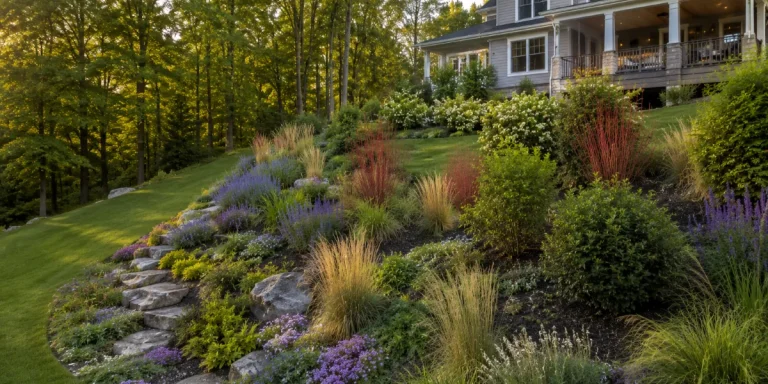
Instead of a single row, many of our projects use a layered approach:
-
- Taller evergreens in the back
- Mid-sized shrubs for density
- Lower plantings to fill gaps and soften edges
This creates:
-
- Better visual coverage
- A more natural, designed appearance
- Stronger long-term performance
Fast-Growing Options (With Tradeoffs)
Some homeowners want quick results, and fast-growing plants can help, but they come with tradeoffs.
-
- Faster growth often means more pruning
- Plants may become too large over time
- Shorter lifespan in some cases
We typically balance fast growers with longer-term, stable plantings.
How Privacy Plantings Should Be Installed
Installation is where most privacy projects go wrong.
Proper installation includes:
-
- Correct spacing based on mature size (not planting too tight)
- Staggered layouts instead of straight lines when possible
- Soil preparation to support root growth
- Mulch installation to retain moisture and suppress weeds
- Initial watering plan to help plants establish properly
A properly installed planting will fill in naturally, without becoming overcrowded.
Irrigation & Watering Considerations
The first 1–2 years are critical for success. In Central New Jersey, we often deal with clay-heavy soils and inconsistent rainfall, so proper watering is key.
Important considerations:
-
- Consistent watering during the establishment phase
- Avoiding overwatering in poorly draining soils
- Using drip irrigation for efficiency and root development
- Adjusting watering based on sun exposure and season
Once established, most privacy plantings require significantly less ongoing watering.
Maintenance Expectations
Privacy plantings are relatively low-maintenance, but not maintenance-free.
Over time, you’ll need to:
-
- Prune for shape and density
- Manage growth to prevent overcrowding
- Remove any underperforming plants
- Maintain mulch and bed edges
The goal is controlled, intentional growth, not letting plants become overgrown again.
What Size Plants Are Available (and What Should You Choose)?
One of the most common questions is how big the plants should be at installation.
Typical nursery sizes include:
-
- 3–4 feet – Lower cost, longer time to fill in
- 5–6 feet – Balanced option for cost and impact
- 6–8 feet+ – Immediate screening, higher investment
Larger plants provide faster results, but smaller plants often establish more easily and can be more cost-effective over time.
How Long Does It Take to Get Full Privacy?
Privacy plantings take time to mature, and setting expectations is important.
Typical timeline:
-
- 1–2 years: Initial establishment and partial screening
- 3–5 years: Noticeable privacy and density
- 5+ years: Mature, fully developed screen
Spacing, plant selection, and growing conditions all play a role in how quickly this happens.
Common Privacy Planting Mistakes to Avoid
We often get called in to fix these issues:
-
- Planting too close together
- Choosing the wrong species for the space
- Ignoring drainage or soil conditions
- Expecting instant results
- Not planning for mature size
Avoiding these mistakes is what separates a short-term fix from a long-term solution.
When It Makes Sense to Bring in a Professional
Privacy planting seems simple, but doing it right requires planning.
It’s worth bringing in a professional when:
-
- You’re dealing with slopes or uneven terrain
- Drainage is affecting plant performance
- You want a layered, natural-looking design
- You want a solution that lasts long-term
The layout and plant selection matter just as much as the installation.
Start Planning Your Privacy Screen the Right Way
A well-designed privacy planting doesn’t just block a view, it improves how your entire landscape looks and functions.
At Lewis Natural Landscapes, we design and install privacy plantings across Central New Jersey that are tailored to your property, your goals, and your long-term maintenance preferences.
Request a free quote to get started, or schedule a paid consultation if you want a detailed planting plan you can implement on your own.