Best Native Plants for Stabilizing Sloped Backyards in Central New Jersey
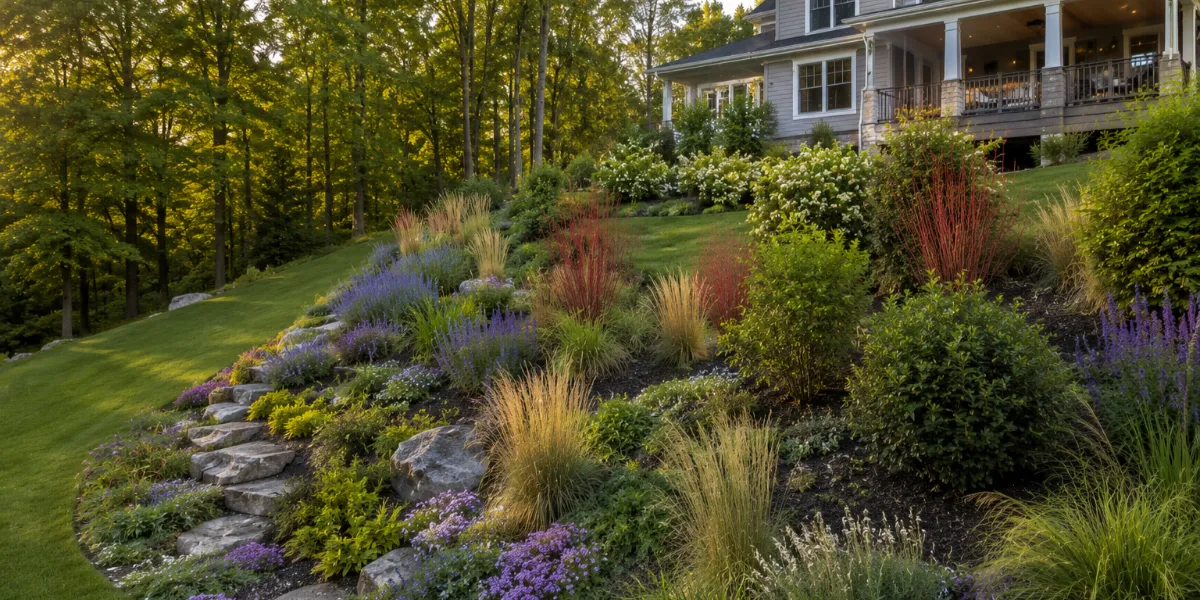
Sloped backyards can be some of the most challenging areas to landscape. Between erosion, runoff, and limited usable space, they often create more problems than they solve.
At Lewis Natural Landscapes, we bring over 25 years of hands-on experience working with challenging properties across Central New Jersey. From mild slopes to steep grade changes, we design and build solutions that stabilize the landscape, improve drainage, and make these areas usable again.
Native plantings are often one of the most effective tools, when used the right way.
Why Sloped Yards Struggle Over Time
Most slope issues come down to how water moves across the property.
In Central New Jersey, common problems include:
-
- Heavy rain washing soil downhill
- Clay-heavy soil holding water in some areas and drying out in others
- Shallow-rooted plants that fail to hold soil in place
- Poor grading or outdated landscape layouts
Over time, this leads to erosion, exposed roots, and areas that are difficult to maintain or use.
Why Native Plants Work Well on Slopes
Native plants are naturally suited to New Jersey’s conditions, making them a strong choice for stabilizing slopes.
When selected and placed properly, they offer:
-
- Deep, established root systems that help hold soil in place
- Better adaptation to local climate and rainfall patterns
- Lower maintenance once established
- Improved water absorption and reduced runoff
Instead of fighting the slope, native plantings work with it to create a more stable, natural system.
Best Native Plants for Sloped Backyards in NJ
A successful slope planting plan uses a mix of plant types to control erosion and create long-term stability.
Deep-Rooted Grasses & Stabilizers
These help anchor soil and reduce erosion:
-
- Switchgrass
- Little Bluestem
- Blue Wild Indigo
Groundcovers for Erosion Control
These spread and cover exposed soil quickly:
-
- Creeping Phlox
- Pennsylvania Sedge
- Wild Strawberry
Shrubs for Structure & Support
These provide long-term stability and visual structure:
-
- Inkberry Holly
- Red Twig Dogwood
- Viburnum varieties
These plants are all well-suited for USDA Zones 6b–7a, making them reliable options for Central New Jersey landscapes.
How to Design a Slope That Actually Works
Plant selection is only part of the solution.
For sloped yards to perform long-term, the layout matters just as much:
A well-designed slope should feel stable, intentional, and easy to maintain.
When Plantings Alone Aren’t Enough
In some cases, plants alone won’t solve the problem.
Steeper slopes or areas with heavy water flow may require:
-
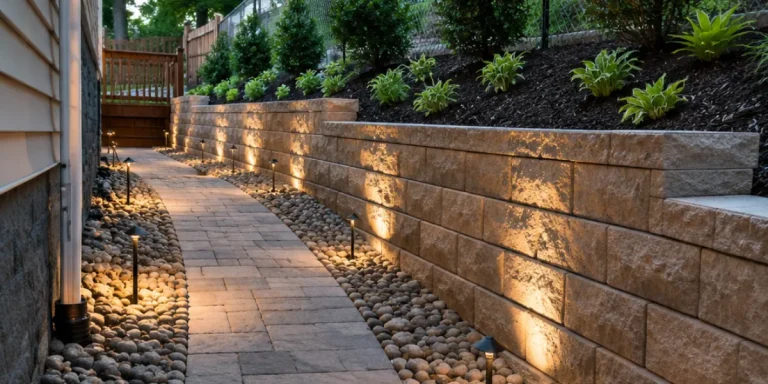
- Retaining walls to hold grade
- Drainage systems to redirect water
- Regrading to correct underlying issues
The best results often come from combining plantings with structural solutions.
A Smarter Approach to Sloped Landscapes
Stabilizing a slope isn’t about covering it with plants and hoping for the best. It requires understanding how your property handles water, soil, and elevation.
At Lewis Natural Landscapes, we design solutions that combine native plantings, proper grading, and structural elements where needed, creating landscapes that are stable, functional, and built to last.
If you’re dealing with a difficult slope or erosion issues, the right plan makes all the difference.
Start Fixing Your Slope the Right Way
If your backyard slope is causing problems, the first step is understanding what’s actually happening on your property.
Do you need help with your sloped backyard? Request a FREE quote today or we also offer paid consultations where we provide you the plan and you can implement it.
We’ll walk your site, evaluate conditions, and design a solution that stabilizes your landscape and makes the space usable again.